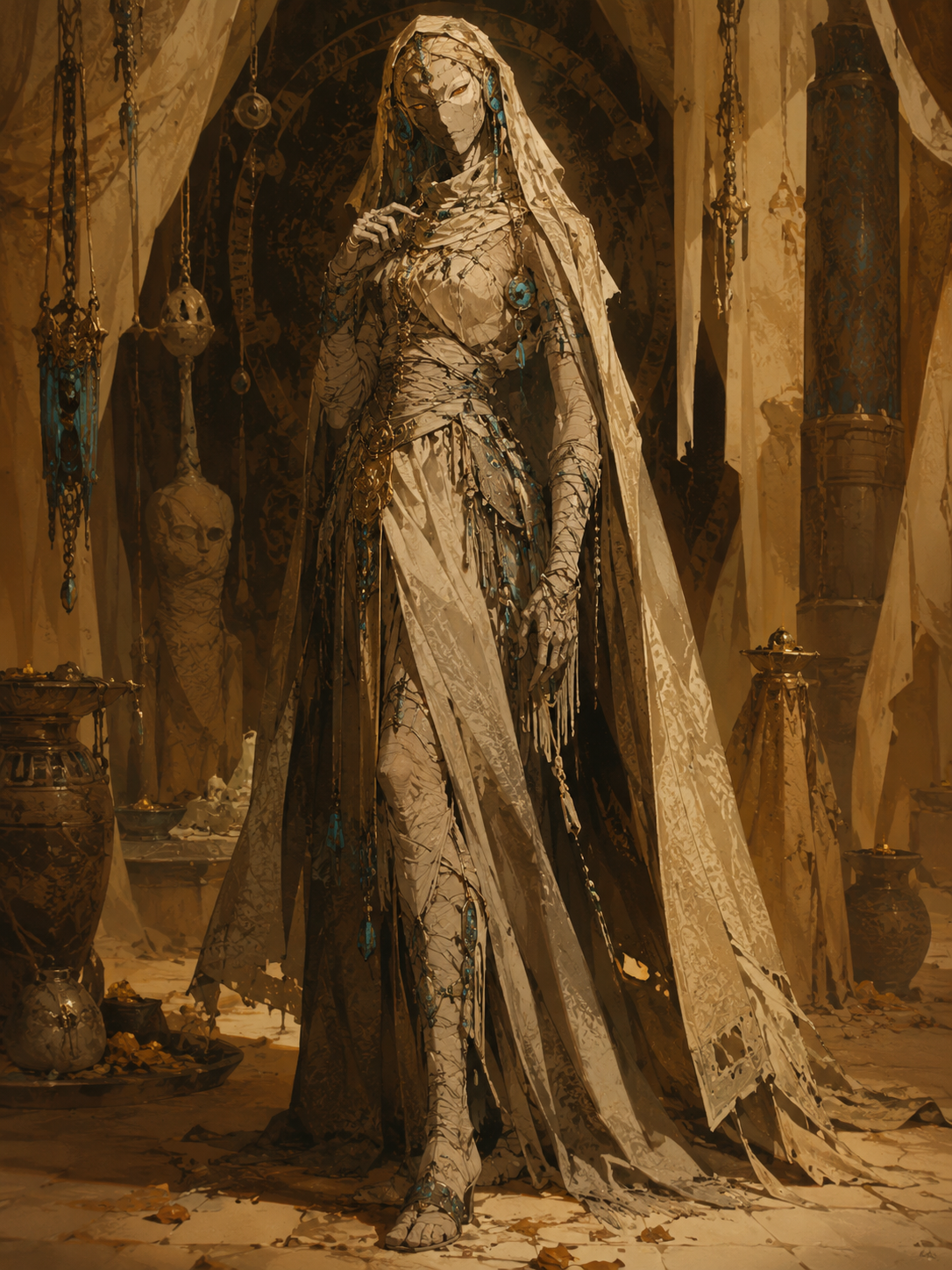
Qezh
A guarded desert people whose wrapping styles speak of family, mourning, status, and belonging.

In the desert’s depths, Qasyrra has made water, shade, and fear into the language of an ancient multi-people empire.
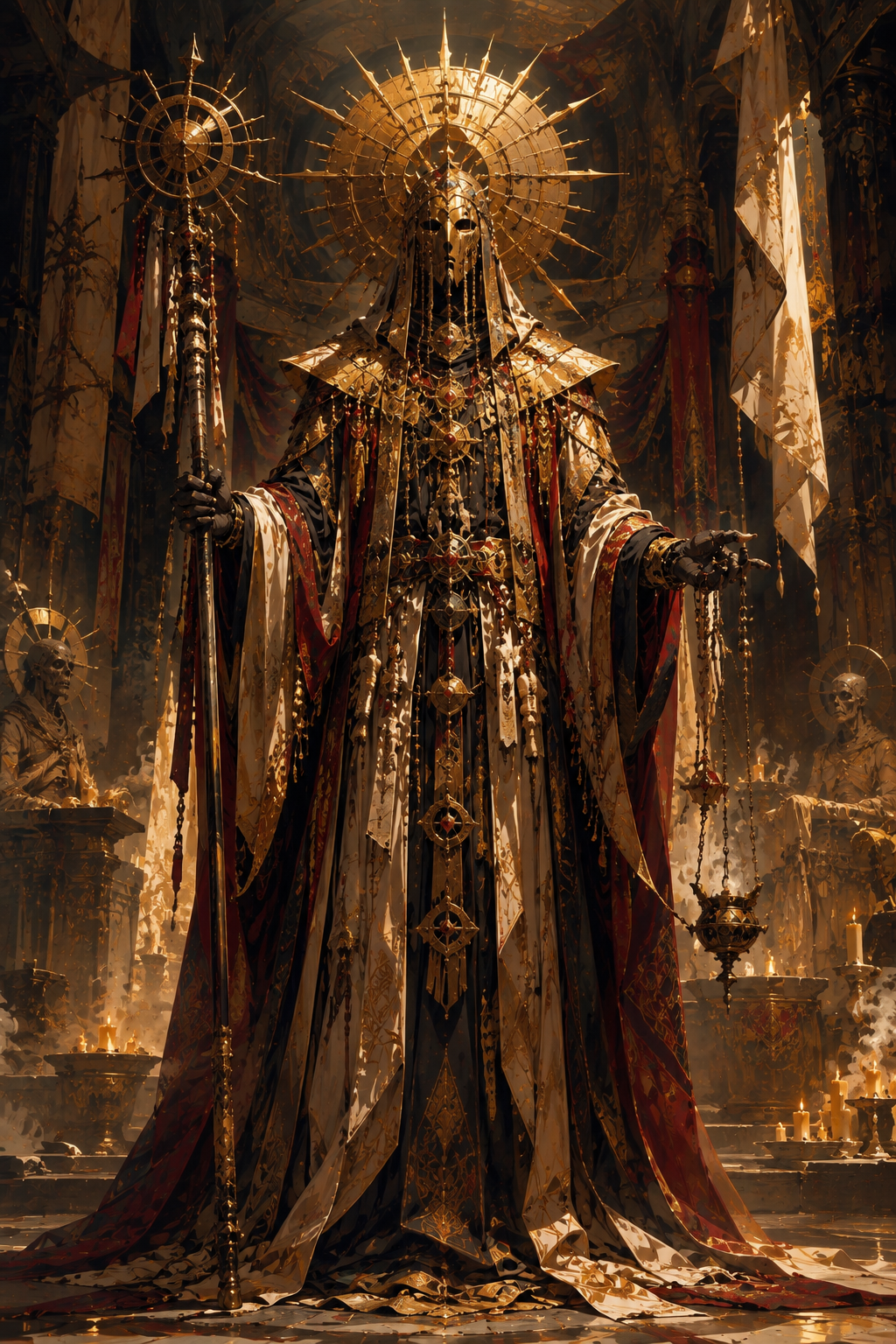
Qasyrra’s core cities lie not at the desert edge but in interior regions that outsiders long considered uninhabitable. Underground reservoirs, old dry riverbeds, permanent rivers, shade corridors, and oases are its true roads. A line of sand that a visitor calls empty ground may be an inviolable water-house territory, a seasonally closed passage, or a sacred water right to Qasyrrans.
This isolation is not magical invisibility. Knowledge of which hour, which shade, and which water share will carry a traveler through the desert is worth more than an army’s map. The outside world did not know Qasyrra until the Age of Breakage and Refuges; even once trade opened, the empire did not grant free passage into its interior.
Qasyrra is not the state of one people. Qezh customs of burial, wrapping, and refuge; Szaïr trade houses, debt memory, and wide diaspora; and the Ossai tradition of court, river, and ceremony coexist under one roof. Minotaur water houses, Thri-kreen communities, and other desert peoples join the empire through different measures of tribute, allegiance, or trade; they do not all live the same daily life.
In much of the empire, water rather than land is the primary unit of rule. Well chains, basins, canals, carrying networks, and temple estates make the power of houses, Neshar priests, and the Seven Shadowed Council a matter of constant negotiation. The empress therefore appears more absolute from afar than her local authority ever is in practice.
Dynastic legitimacy passes through the female line. The first foreign-contact records name Zhaqara as empress and the High Neshar Quemenar as a member of the council; these are the outside world’s first reliable witnesses, not certain records of the present throne. The Seven Shadowed Council balances great houses, priesthood, and historical power blocs. It is feared because its decisions do not arise from the palace alone.
Over millennia, women’s average resilience to prolonged heat and dehydration made state service female-dominated. This is not the simple hierarchy of “women above men.” Men can hold enormous power in trade, property, craft, medicine, education, music, and scholarship, but offices that rule in the name of the state are closed to them. Caste works independently of that divide: a man of a high house can be far more privileged than a woman of a low caste.
| Caste tradition | Burden and authority |
|---|---|
| Azhara · House of the Sun | Ruling families, high officials, and great judges. |
| Neshar | Priesthood: funerals, offerings, solar calendars, temple economy, and oath witnessing. |
| Sahr · Sword-Well | Army, frontier guards, well protectors, and desert guides. |
| Vezz · Hand and Scale | Traders, craftspeople, healers, dye and spice makers, and architects. |
| Khel · Earth | Farmers, salt and water workers, herders, and heavy-labour networks. |
In Qasyrra, Azh-Khar is not the Sun’s life-giving face but the power that lessens water, makes shade precious, and takes its due. Neshar is a priestly order beyond peoplehood, open to Qezh, Szaïr, Ossai, and members of other communities; it oversees funerals, offerings, calendars, temple economy, and oath witnessing. Faith is inseparable from politics, but it does not explain the empire by itself.
The Moon is Azh-Khar’s Blind Face, so night is the social time in which people briefly leave its gaze. The meaning of the full moon, new moon, and eclipse; water rites, unveiling, temple practice, and the ethics of night are detailed in Azh-Khar and the Blind Face.
Qasyrra’s first great exports were not metals but sunfast dyes, intense spices, resins, oils, and rhythm. Szaïr trade houses built the most visible diaspora; Qezh communities maintained more closed networks; Ossai commonly travelled on diplomatic or state business. Minotaur and Leonin networks carried goods between continents, while lower-caste musicians spread through ports and foreign courts. Qasyrra’s sound thus reached Avarra without opening its interior.
A guarded desert people whose wrapping styles speak of family, mourning, status, and belonging.
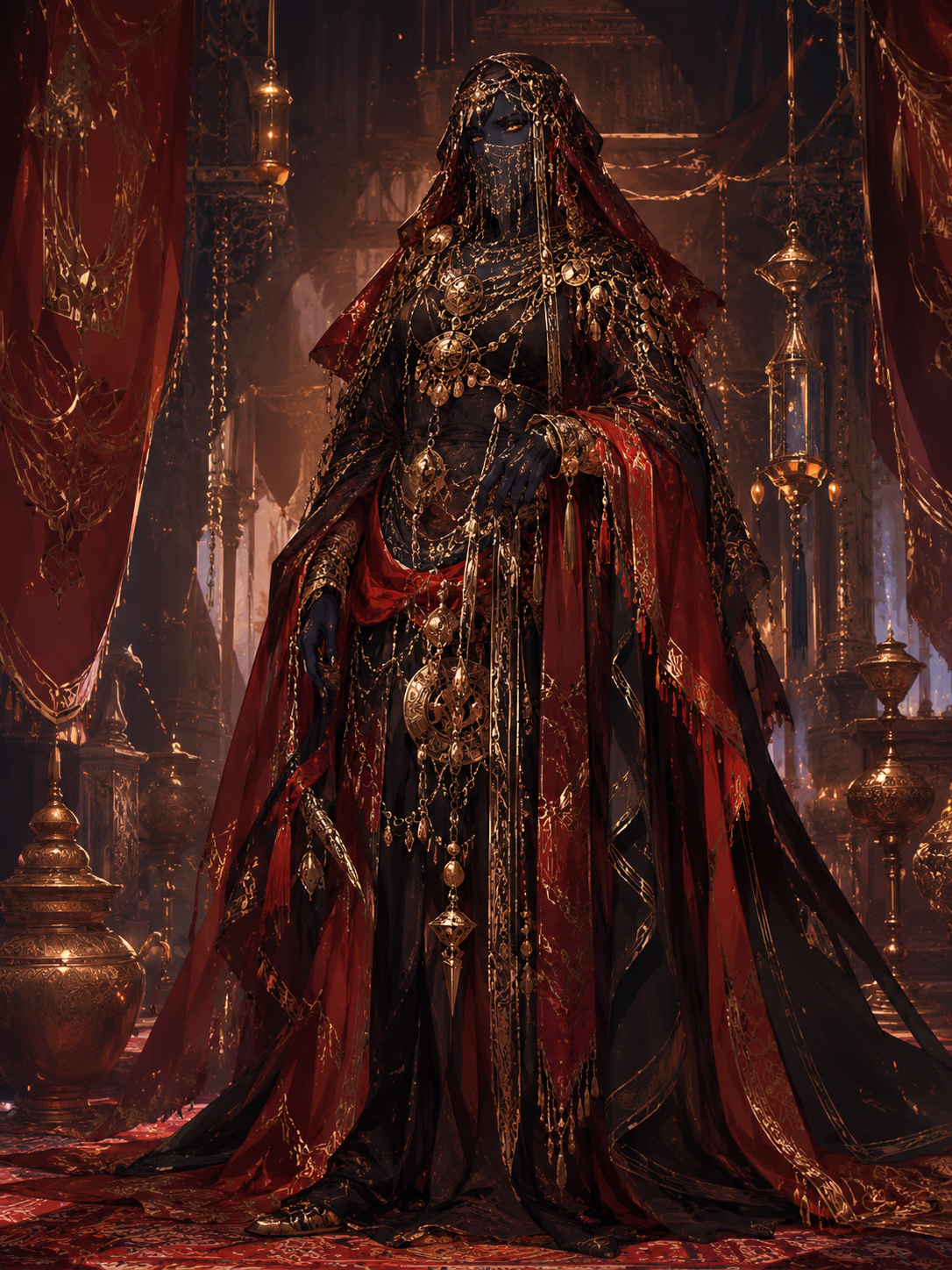
An urban mercantile people who carry wealth, debt, and house memory on the body.
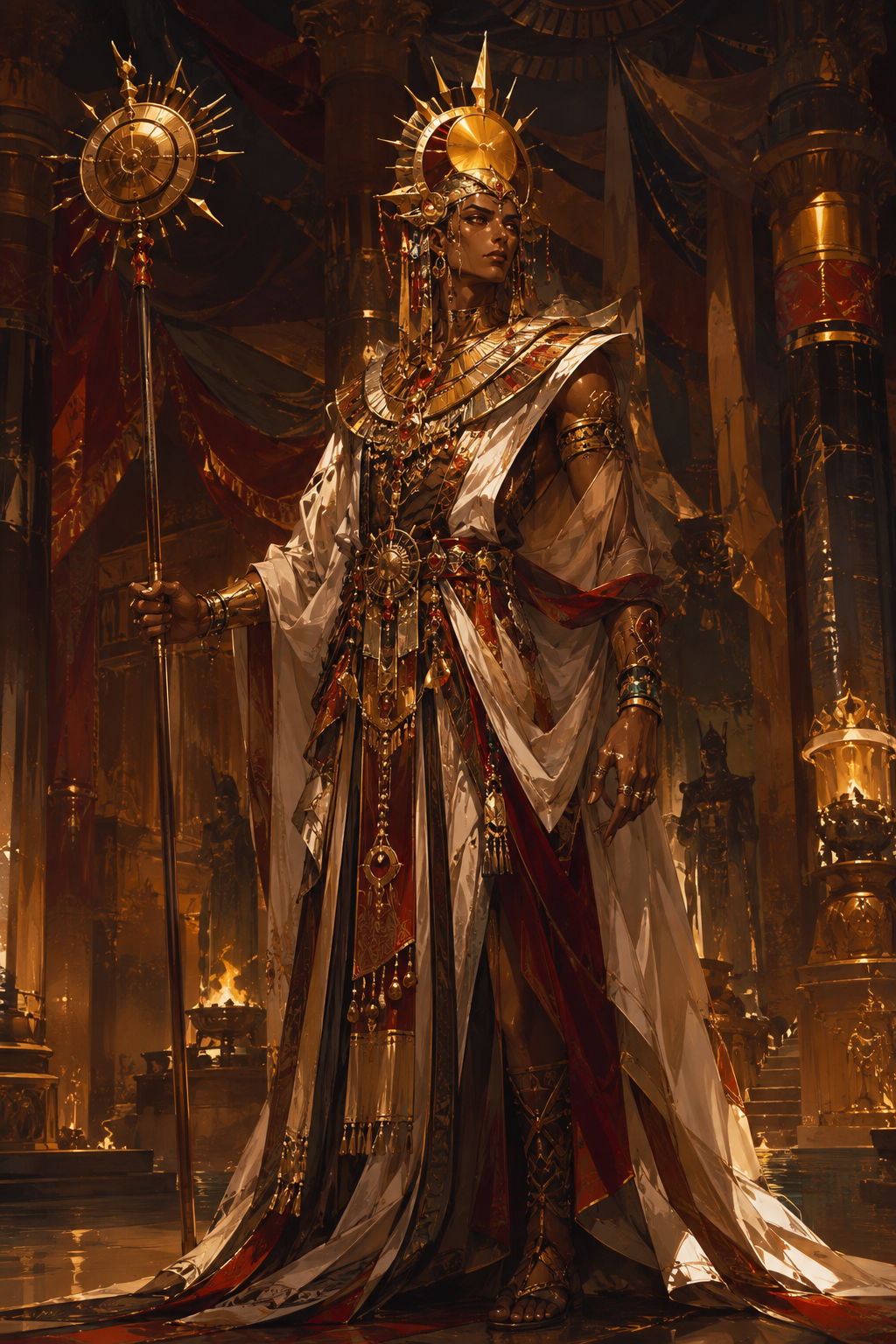
The people most visibly associated with the empire’s river, court, and solar-regalia face.
Links: Age of Breakage and Refuges, Age of Crowns, Minotaurs, Thri-kreen.
Cross-references